
No Grant County 72-Hour Feed
The Grant County Sheriff website and county sitemap contain no current inmate roster, rolling 72-hour release list, archive, stated update cadence, or sheriff app. The research also found no official field list, online retention period, or booking-photo flag for such a product. Those absences must remain explicit. A third-party page or a collection of roster snapshots cannot be relabeled as Grant County’s official three-day record.
Grant County’s Sheriff lists prisoner transport and central records, not an operating county jail division. The actual holder may be a receiving county jail. A dated local report documents one Grant arrest booked into Wilkin County Jail, but that case is only proof that Wilkin has served as one receiving facility. It does not prove every Grant County detainee is held there. The right jail must be confirmed for the person and dates at issue.
Check Grant County Three-Day Releases
Use exact boundaries for the period. “The last three days” can shift during processing and can mean calendar dates or a rolling 72-hour interval. State the beginning and ending date and time, then ask whether an existing public release or movement report covers that span. If no report exists, ask what maintained public data can answer the request. The custodian may not be required to create a new list.
- Set an exact start and end time for the 72-hour range, including the year and local time context.
- Call Grant County Sheriff at 218-685-8280 and ask which facility held each named person or maintained releases and transfers during that span.
- Send the request to the confirmed custodian. Ask for admission, release, transfer, disposition, and receiving-agency fields if maintained and public.
- Use Minnesota VINELink for a person-specific participating-agency event, then confirm the event with the jail record.
- Check Minnesota Court Records Online for bond, dismissal, commitment, sentence, or revocation entries that explain the legal basis.
- When the person entered state prison, switch to the Minnesota DOC Locator and read the DOC status rather than a county release request.
The Released Last 24 Hours page narrows the process for activity believed to have occurred today. A wider range is useful only when its dates and custodian remain clear.
Grant County 72-Hour Record Fields
Because no official list exists, the table is a field request, not a description of online columns. A person’s name alone may be too broad. Add an approximate booking date, a known booking number, or a court file number when available. Requesting a field does not guarantee that the agency maintains it or that every part is public.
| Field to request | Why it matters across three days |
|---|---|
| Full name and identifiers | Separates people with similar names and supports the correct agency match. |
| Booking number | Connects admission and movement entries within the same custody event. |
| Booking date and time | Shows whether the event began before the requested 72-hour range. |
| Holding facility | Identifies the custodian whose record can prove physical departure. |
| Release date and time | Places the end of that agency’s custody within or outside the range. |
| Release or movement reason | Distinguishes community release from transport or continued custody. |
| Destination or receiving agency | Shows where to continue when one agency transferred the person. |
| Court file and authority | Connects the movement with the legal order or case disposition. |
Minnesota Statutes section 13.03 supplies the public-data access baseline, while other classifications may govern specific material. The research found no dedicated Grant sheriff release-record form, fixed fee, or promised response time. Ask central records for a fee estimate, the correct submission method, and whether the requested date-bounded data already exists.
Grant County Weekend Release Checks
A three-day window can span a weekend or holiday, but no Grant County source states a special weekend release schedule, processing lag, exit location, or holiday practice. Do not invent one. The wider interval simply gives the custodian a broader date range to search. It does not change the proof needed for each movement, and it does not guarantee that an agency clerk will process a historical request during all hours that operational staff are available.
The Sheriff’s page says the office operates 24 hours a day, seven days a week. That is useful for identifying the current holding facility and asking operational custody questions. It is not a published service standard for records production. When a period crosses nonbusiness days, record the precise endpoints and preserve the response from the appropriate jail or records custodian.
Court and custody times may also differ. A judge can issue an order before jail staff complete release steps or clear another hold. The court case explains authority. The jail movement record supplies the actual departure time. If another agency accepted the person, the next agency’s record is needed before describing a return to the community.
Use the same care with a period that starts before an admission. Someone booked late on the first date may be released on the third date, while another person admitted earlier may have a movement inside the window. A release-date request should focus on movements during the span, not only bookings that also began within it. That distinction keeps the request aligned with the three-day release intent and reduces the risk of excluding a custody event that started before the range.
Note: A three-day window improves date coverage, but it does not cure an agency mismatch or prove that custody ended everywhere.
Wilkin Records for Grant County Releases
The official Wilkin County Jail page documents a receiving facility that has held at least one person arrested in Grant County. Its captured view is relevant only after Grant County Sheriff or the court connects the specific custody event to Wilkin.
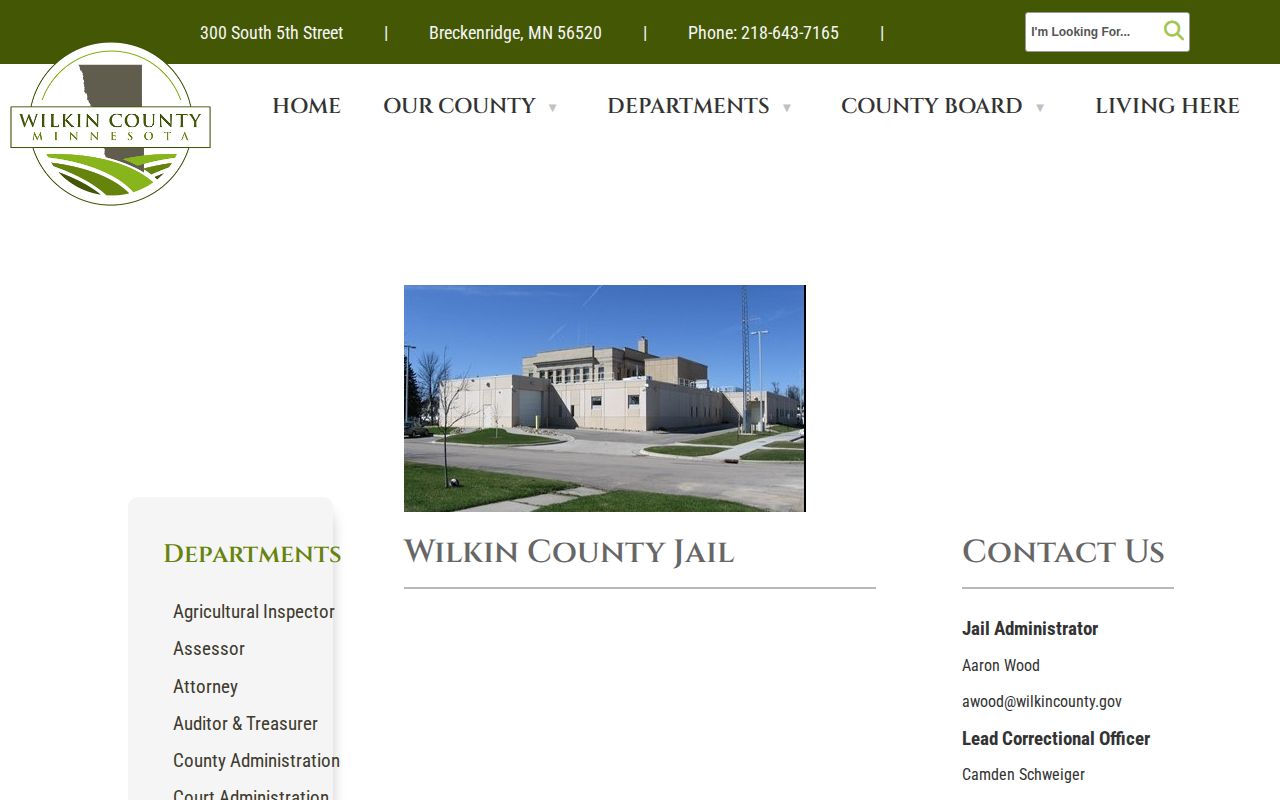
Wilkin’s site does not establish a distinct rolling 72-hour release feed applicable to Grant cases. If Wilkin maintained the booking, ask Wilkin for its own movement record and search the person under the correct agency in VINE. A Wilkin release to DOC or another jail ends Wilkin custody only. It must not be reported as a community release without checking the receiving system.
Compare Grant County Release Sources
Different systems answer different questions. A records response from the holding jail documents its physical movement. VINE can show a participating agency’s status event and support future alerts. MCRO explains the court disposition. Minnesota DOC covers adults under state corrections jurisdiction. Federal and immigration systems apply only when those authorities are involved. None is a substitute for all the others.
| Source | What it can support | What it cannot prove alone |
|---|---|---|
| Grant Sheriff central records | Grant-owned arrest, transport, release, or routing data. | A receiving jail’s physical release when Grant did not own that booking. |
| Receiving jail record | Admission and movement from that jail. | Freedom from every later custodian after a transfer. |
| VINELink | A participating agency’s person-specific custody status or event. | A certified record or guaranteed real-time update. |
| MCRO | Public legal entries such as bond, dismissal, sentence, or commitment. | The precise time jail staff completed physical release. |
| Minnesota DOC Locator | Prison or supervision status for people still under DOC jurisdiction. | An ordinary county-jail-only release. |
A person still listed in the confirmed jail remains reported in that jail’s custody. A person released from prison to supervision has left prison but remains under DOC jurisdiction. Someone transferred from a county jail has left that jail while custody continues elsewhere. These are not interchangeable meanings of “released.”
Confirm Grant County Release Records
Build the conclusion around the source that owned the event. Pair the jail’s release or transfer entry with the related court disposition. For a state-prison case, compare DOC’s current status, status-effective date, and any expiration date with the court file. If the person is no longer in BOP custody or has an immigration case, use the relevant federal system and read its limits before drawing a conclusion.
No result is not a release event. It can reflect the wrong spelling, wrong agency, delayed data, a fully historical record, a sealed or expunged matter, or a system that never covered the person. Current roster disappearance is equally weak. A record can drop from public view without changing what happened during the requested 72 hours.
Use agency-specific language in the final notes: released from the confirmed county jail, transferred from Grant custody, released from Minnesota prison to supervised release, or no longer held by the named federal agency. The full Grant County released inmates search supplies the longer path for one named person and records outside the recent three-day period.
The regional Grant warrant link does not close this gap. A warrant concerns wanted status, not the departure time from an earlier jail stay. Likewise, no sheriff mobile app was found through the county page or sitemap, so an app-store name match should not be treated as an official Grant County channel. Keep the records trail tied to the Sheriff, the confirmed holding jail, VINE, the court, and the correct state or federal agency.