
Wilkin County Jail Release Paths
A person leaving Wilkin County Jail can follow several paths. Bond or a court order may permit return to the community after all holds clear. A local sentence may end through time served or sentence completion. Another event can move the person to Minnesota DOC, another county, or a different authority. The release disposition and receiving-agency fields, if maintained and public, distinguish those results.
Use agency-specific language. A Wilkin movement record establishes when Wilkin’s physical custody changed. It does not prove that all custody ended. If the record shows a transfer, check the receiving system before describing the person as free in the community. The court file can explain the legal basis for bond, dismissal, sentence, or commitment, but the jail record is the stronger source for the time Wilkin completed the physical movement.
Confirm a Wilkin Jail Release
The reliable search begins with the actual booking, not the county of arrest alone. Grant Sheriff can often route a Grant County inquiry because its official duties include prisoner transport and central records. Once Wilkin is confirmed, use Wilkin’s own jail channel for the physical custody record. A case-specific news item is only a lead and cannot confirm another person’s route or release.
- Call Grant County Sheriff with the full name and approximate arrest date. Ask which facility booked the person and whether Grant’s record reflects transport.
- When Wilkin is confirmed, contact Wilkin County Jail through its official jail page. Give the booking date or number when known.
- Search the correct person and agency through Minnesota VINELink. An out-of-custody result reports the feeding agency’s status and may not disclose every destination.
- Review the related case through Minnesota Court Records Online. Compare the person, case number, bond, sentence, dismissal, or commitment entry.
- Request Wilkin’s public booking and movement fields. Ask whether the event was a community release or transfer, and request the receiving agency when that field exists.
A Wilkin no-result does not prove release. Spelling, timing, data coverage, a different receiving jail, or an older record can explain it. For a Minnesota prison commitment, switch to the Minnesota DOC Locator. That statewide tool covers adults still under DOC jurisdiction, not ordinary jail-only cases. The Grant County released inmates search supplies the wider local, state, court, and federal fallback sequence.
Wilkin Jail Records Contact
Wilkin County Sheriff operates the jail in Breckenridge. The researched official page establishes the facility and directs operational questions through the county’s current jail channel. A separate, verified jail records number, records-request email, office schedule, fixed release-record fee, or promised response time was not established. Use the live jail page to identify the right custody or records contact instead of relying on an unverified directory listing.
Breckenridge, Minnesota
Wilkin County general phone: 218-643-7165
Use the official jail page for the current custody and records channel
Ask Wilkin only for data it created or maintains. A focused request should identify the full name, approximate booking date, known booking number, arresting agency, and court file number. Request public admission date and time, release date and time, movement reason, public hold information, destination or receiving agency, and the booking photograph when relevant. If a field does not exist or is not public, the custodian should apply the controlling law.
Minnesota’s public-data baseline appears in section 13.03. Inspection of public government data is free, while authorized copy costs can apply. Ask for electronic delivery and an itemized estimate before costs are incurred. For one hundred or fewer black-and-white letter or legal pages, the statute caps the charge at twenty-five cents per page. No Wilkin-specific release-record fee was established by the Grant County research.
Wilkin County Jail Custody Facts
Wilkin County’s official site describes the Breckenridge facility as a county jail operated by the Wilkin County Sheriff. Unlike the Grant County Sheriff’s transport-centered office, Wilkin is a verified operating jail. The official page supplies a sourced capacity figure, but capacity does not show how many Grant County detainees are held there or establish a county contract.
No researched source provides a Wilkin recent-release window, update cadence, online retention period, release time, property procedure, or Grant-specific booking share. Use the current facility channel for operations. Policies can change, and a general capacity statement should not be stretched into a claim about a named person’s status.
The official source is visible in the captured Wilkin County Jail page.
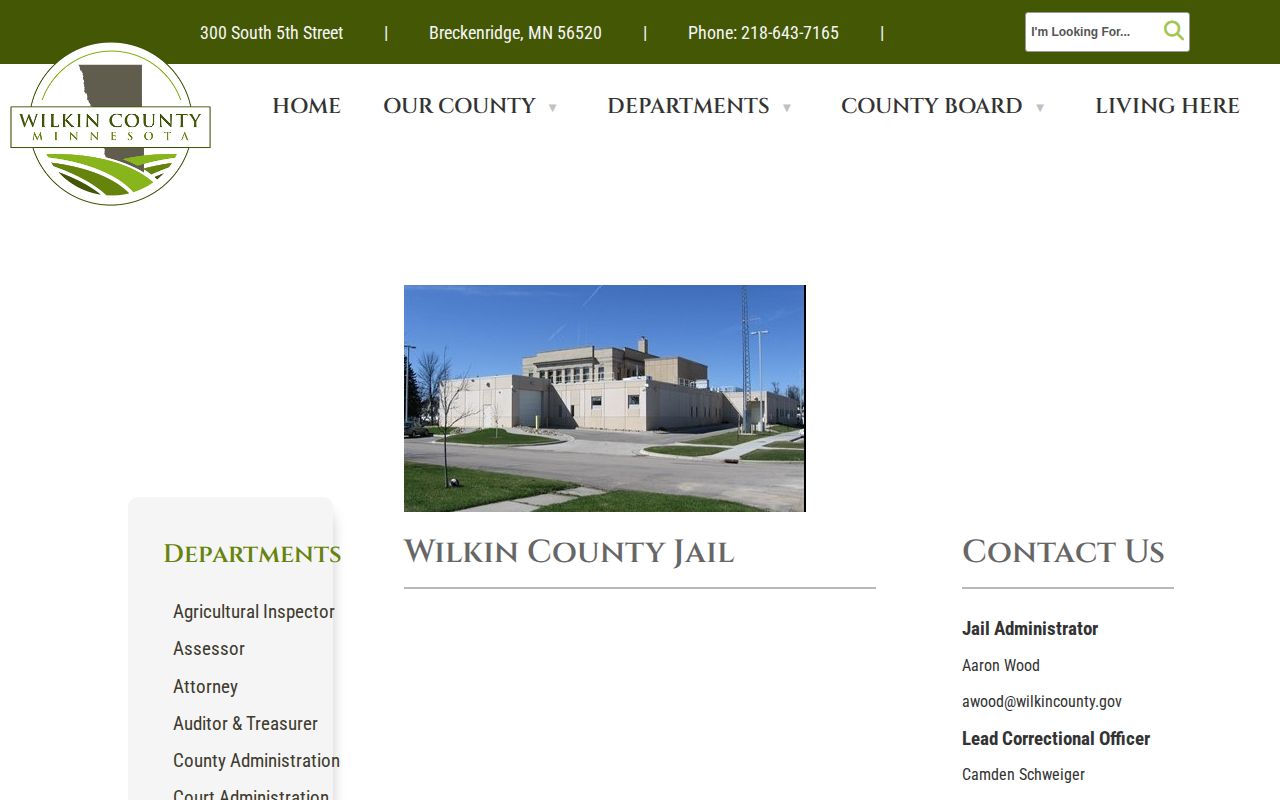
The image supports the facility’s identity and stated size. It does not show a Grant County contract, a release list, or any named person’s present custody status.
Grant Custody at Wilkin Jail
Wilkin belongs in Grant County’s facility map because a dated June 2026 report states that one person arrested in Grant County was booked into Wilkin County Jail. That is direct, case-specific evidence of a receiving-jail path. It is not evidence that Wilkin receives every Grant detainee, that the relationship is exclusive, or that the same route applied on another date.
For a new inquiry, treat the report as context. Ask Grant Sheriff where the named person went. Then compare the answer with the court file and the receiving jail’s record. If the Sheriff names Wilkin, request the Wilkin booking or movement data. If the Sheriff names a different jail, use that custodian instead. This sequence prevents a false no-result caused by searching the wrong county.
Record ownership follows the event. Grant may retain arrest, incident, warrant, and transport information. Wilkin owns the booking and physical movement it performed. The court holds filed orders and docket entries. When one source lacks a detail, use the source responsible for that part rather than asking one office to reconstruct another agency’s records.
Note: The county of arrest may differ from the county that books, holds, releases, or transfers the person.
Wilkin Jail’s Grant Release Role
Section 19’s local facility angle begins with Grant County’s own official record. The Grant Sheriff page lists prisoner transport and central-records duties but does not identify an operating county jail. That makes an outside receiving facility plausible, though the receiving county still must be verified for each person.
A June 18, 2026 local report supplies the documented link to Wilkin County Jail for one Grant arrest. The official Wilkin page confirms the jail exists and identifies its capacity. Together, those sources justify a Wilkin facility page. They do not show a blanket arrangement. The sound factual phrasing is “documented receiving jail on a case basis,” not “the Grant County jail.”
This distinction affects release proof. If Wilkin accepted the person, a Grant transport entry can show arrival at the next custodian, while Wilkin’s later movement record shows the end of Wilkin custody. An out-of-custody VINE event may add timely notice, and the court case may explain the authority. The sources form a chain. None should be made to prove more than it records.
Read Wilkin Release Records
A Wilkin release record may be a booking disposition, jail-management movement, release authorization, bond entry, or transfer record. Its core value is the time and reason Wilkin’s control changed. Pair that with the next-custody field whenever possible. A date without a movement label cannot reliably distinguish release to the community from transfer.
| Source or field | What it can show | Limit |
|---|---|---|
| Wilkin booking number | The exact admission tied to the movement. | It does not by itself show the final disposition. |
| Release date and time | When Wilkin custody ended. | The next destination must still be checked. |
| Movement reason | Bond, court release, sentence completion, or transfer if recorded. | Labels depend on the jail’s system. |
| Receiving agency | Where custody continued after Wilkin. | The receiving system must confirm its own status. |
| Court file | The legal order or case context. | It may not state the physical departure time. |
| VINE event | A participating agency’s custody-status change. | Transmission can lag and the event remains agency-specific. |
Bond approval does not always equal immediate exit because another hold can remain. A dismissal can remove the case basis while jail processing continues. Time served can end local confinement while supervision or a separate case remains. A transfer to DOC closes the Wilkin booking but begins or continues state custody. The official field wording should control the description.
If a record is older or absent from a live service, make a focused written request to Wilkin. No researched online retention period supports a claim about how long a former booking remains visible. Sealing, expungement, data classification, spelling, and agency coverage can also affect access. A no-result is a reason to check the custodian, not proof of release.
After a Wilkin Jail Transfer
When Wilkin transfers a sentenced person to Minnesota DOC, use the statewide Locator. Read Current Status first. Incarcerated and a facility mean the person remains in prison. Anticipated Release Date is a future administrative estimate, not proof that release occurred. Under Supervision as of supports physical release from prison while state correctional jurisdiction remains in force.
Federal and immigration paths use other systems. The BOP Inmate Locator can show a federal release date or that someone is no longer in BOP custody, but the Bureau warns that another agency may still hold the person. The ICE Online Detainee Locator covers immigration detention within its limits. A no-result can reflect lag, transfer, spelling, missing coverage, or release. Neither tool substitutes for Wilkin’s own movement record.
A federal pretrial person can also move under U.S. Marshals Service authority before a BOP designation appears. The federal docket may explain detention or bond, while the responsible agency owns the physical movement. State, federal, and immigration systems should never be combined into one generic “inmate search.” Start with the receiving agency named in Wilkin’s record.